
Every Child Deserves the Opportunity to Thrive: A Q&A with Parent Donor Michelle Pink
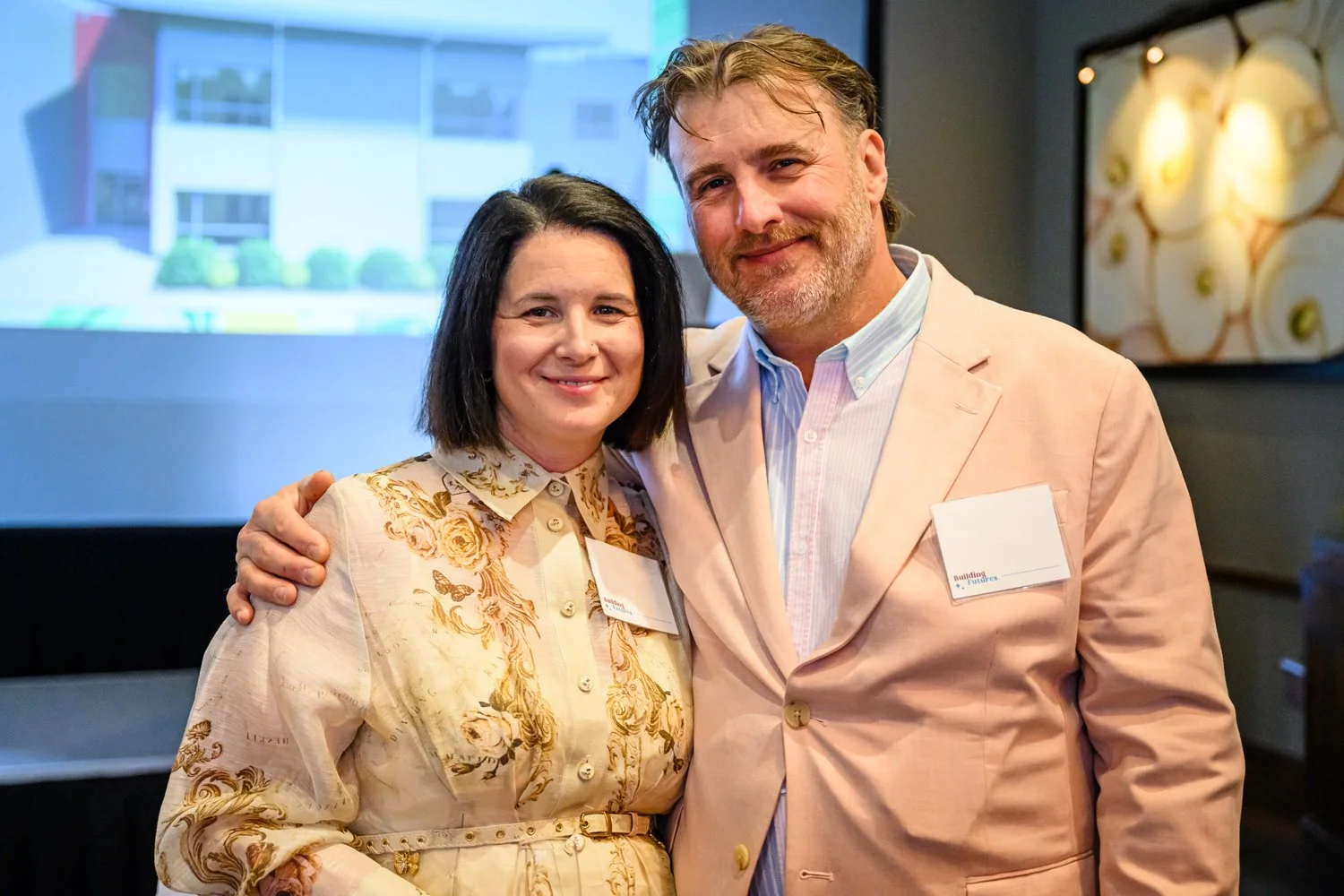
Can you share a bit about your family and your children’s journey before coming to the Academy?
Our eldest, Cash, had always been a very bright child. He learned his letters early, was reading by age four, and school came easily to him. However, by Grade 4, we started noticing a shift in both his grades and behaviour. Another parent encouraged us to pursue a psycho-educational assessment; something we knew very little about at the time.
We expected a diagnosis like ADHD. What we weren’t prepared for was dysgraphia—a condition we had never even heard of. It was explained to us as having to write with your non-dominant hand every day. Cash had to focus so much on forming words that the content became secondary, and often, he simply disengaged. We had no idea this was what he was experiencing.
What led you to choose this school for both of your children?
We were quick to help support Cash with accommodations for his learning at school. However, the school found these accommodations, such as speech to text or use of a scribe, to be distracting to other kids in the class. For many exercises where our son wanted such accommodations, the teacher would actually send him into the hallway to utilize them.
We knew our son could not spend the next 7 years learning in a hallway, so we started to explore our options immediately. Luckily we had heard of Rundle, again through our amazing psychologist, and the timing for entry aligned.
With our daughter, the experience was different. We recognized early that she had learning challenges and had her assessed as soon as possible. With that early insight, the decision was clear: we wanted her to grow in an environment like Rundle, where she could truly thrive.
What changes have you seen in your children since joining the Academy?
Our son has gone from a middle-range student — one who likely would have just scraped through the rest of school on minimal effort — to achieving honour roll at Rundle. At Rundle, every teacher saw his potential. He’s now involved in student council, participates in multiple sports teams, and has built friendships that will last a lifetime.
With our daughter, we’ve seen her confidence continue to grow. She is thriving.
Was there a particular moment when you realized, “This is the right place for our family”?
It was at the end-of-year assembly during our son’s first year; Grade 7. It was the most inclusive, kind, and energized school environment we had ever experienced.
You could feel the care from the teachers and see the genuine happiness in the students. Kids were being celebrated for who they were. My husband and I looked at each other and knew immediately - this was a very special place.
The Impact on Their Children
How would you describe the difference the Academy has made in your children’s confidence and learning?
Our son has learned how to advocate for himself and the accommodations he needs. That has been the single most important factor in building his confidence. Academics come naturally to him, but learning how to ask for support and approach things differently has been transformative.
With our daughter, she has always been confident and hardworking, but her output didn’t always reflect her effort. She is now learning how to learn — where to focus, how to use her time, and how to be more effective. Even in a short time, we’ve already seen meaningful progress.
What does a typical day look like now as a family compared to before?
Having both kids at the same school has been incredible. They genuinely want to be there. Removing the daily “I don’t want to go to school” struggle is something we don’t take for granted.
What has meant the most to you as parents?
We can just be parents. We don’t have to be tutors at home or advocates fighting the system. Before receiving our acceptance, my biggest fear was what the future would look like for our son; whether he would spend his school years sidelined because his needs were seen as disruptive. That uncertainty was overwhelming.
Their Decision to Give
What inspired your decision to commit $25,000 over five years?
We were incredibly grateful when we were accepted into Rundle, but we clearly remember the feeling of helplessness before that. We all had little control over whether our children would have access to the right environment.
There are very limited options in Calgary for bright children with learning differences, and even fewer public ones.
We always knew that if we had the means, we wanted to help create more space so other families wouldn’t experience that same uncertainty. Every child deserves the opportunity to thrive.
You’ve shared that you are directing your Disability Tax Credit back to the school. Can you tell us what that decision means to you?
The Disability Tax Credit was something we initially knew very little about. We learned about it through another family with a similar experience. When we were approved, it felt validating: recognizing the time, effort, and resources we had invested in supporting our children.
We chose to redirect those funds back to the Academy to help support its expansion and extend that opportunity to others.
Why was it important for you to “pay it forward” in this way?
We knew we weren’t able to be a million-dollar donor. (We are grateful to those out there!) Redirecting $25,000 back into the school felt like a powerful way to give back to a place that has given our children so much, and to help ensure other families have that same opportunity.
For you, what does reinvesting the Disability Tax Credit represent?
It represents an investment not just in our children, but in others like them. These kids are future leaders, entrepreneurs, and innovators. They deserve every opportunity to reach their full potential—and I believe Rundle plays a critical role in making that possible.
Why do you believe it’s important for families who are able to give back?
It matters because almost every parent here has felt that uncertainty and the desire to do what’s best for your child, without knowing if you can access the right support. There simply aren’t enough spaces or resources. No child should be left behind because of that.
How do you hope your gift will impact other students?
We’ve seen firsthand what a gift this school is. It opens doors - giving our children opportunities they may not have otherwise had. Without that support, many students risk losing confidence, disengaging from learning, and facing more limited futures.
Every child should feel limitless. We hope our gift, combined with others, helps make that possible for more families.
What would you say to other parents who may be considering supporting the campaign?
Every gift matters. Not everyone can be a million-dollar donor — and that’s okay. The collective impact is what matters. Imagine what’s possible if everyone contributes in their own way — whether through reallocating a Disability Tax Credit, participating in your work matching programs, or simply giving what they can.
Looking Ahead
What excites you most about the school’s next phase of campaign–Phase 2?
Phase 2 is what will truly enhance the student experience. These are the spaces where students will connect, create, and enjoy being at school. I’ve seen how much these kids value being together - whether through sports or simply spending time with one another.
This phase will give them the environment they need to fully thrive.
How do you see this expansion benefiting your children — and future students?
I am in commercial real estate as a profession. I strongly believe your physical space quietly shapes how you think, learn, and perform; often more than people realize. Environment isn’t just a backdrop. It influences focus, creativity, stress levels, and relationships. Lighting improves alertness. Noise affects concentration.
Right now, the Academy’s physical space doesn’t fully reflect the exceptional quality of teaching taking place. Purpose-built, intentional spaces will create the best possible environment - not just for our children, but for future students as well.
